 Clinical is a type of training that healthcare providers do to improve their skills in patient care. New CNAs must complete a certain number of clinical hours before taking the state certification exam. Apart from state requirements, CNA clinical allow students to apply what they’ve learned in the classroom to a real-life setting.
Importance of CNA Clinical
As a CNA, you’ll be working with patients who are dealing with a variety of different health issues. It can be anything from something as minor as a cold to more severe conditions like cancer or dementia. No matter what the patient is dealing with, you must be able to provide them with the best possible care.
CNA clinical will give you the opportunity to work with patients in a variety of different settings. This includes hospitals, nursing homes, long-term care facilities, and private homes. You’ll be able to learn how to provide primary patient care in each of these settings, as well as how to deal with different types of patients.
One of the most important things you’ll learn during your CNA clinical is how to communicate with patients. This is an essential skill, as you’ll need to be able to explain things to patients in a way they’ll understand. You’ll also need to be able to listen to patients and understand their needs.
Another important thing that you’ll learn during your CNA clinical is how to document patient care. This includes keeping track of things like vital signs, medications, and patient condition changes. This documentation is important as it can help to provide a record of a patient’s care.
Prerequisites for Clinical Training
Most states require that CNAs complete a certain number of clinical hours before they’re able to take the state certification exam. The number of hours required can vary from state to state, so it’s essential to check with your state’s requirements. Other general requirements include the following:
Legal Age: You must be 18 years old to participate in CNA clinical training.
Have a High School Diploma or Equivalent: You’ll need a high school diploma or equivalent before starting your clinical training.
Criminal Background Checks: Many states require that you undergo a criminal background check before you can start your clinical training.
Drug Screening: You may also be required to undergo a drug screening before you can start your clinical training.
Immunization Record: You’ll need to provide proof of immunizations before you can start your clinical training.
Completion of CNA Program: You must have completed an approved CNA program before starting your clinical training.
Passing Physical Exam: Many clinical training programs require you to pass a physical exam before starting your training.
CPR Certification: You may also be required to have CPR certification before you can start your clinical training.
Completion of CNA Program: You’ll need to have completed an approved CNA program before starting your clinical training.
Necessary attire and supplies: Most clinical training programs require wearing scrubs or a uniform. You may also need to bring supplies, such as gloves, shoes and hand sanitizer.
What to Expect During Clinical Training
During your clinical training, you’ll be working with patients under the supervision of a licensed nurse. You’ll be able to learn how to provide basic patient care and deal with different types of patients. Your clinical training will also allow you to work with various medical equipment.
You’ll likely have a schedule that you’ll need to follow during your clinical training. This schedule will include things like when you need to be at the facility and when you’re expected to leave. You’ll also have specific duties you must complete during your shift.
It’s important to dress appropriately for your clinical training. This includes wearing comfortable clothing that you can move around in easily. You should also avoid wearing loose clothing that could get caught in equipment.
You’ll need to follow all the rules and regulations of the facility where you’re completing your clinical training. This includes things like infection control procedures. You should also expect to have your performance evaluated regularly.
After completing your clinical training, you can take the state certification exam. Once you’ve passed this exam, you’ll be able to work as a CNA.
Feeling Nervous about CNA clinical?
Don’t worry if you’re feeling nervous about your upcoming CNA clinical–it’s perfectly normal! However, by following these tips, you’ll be well on your way to success in your CNA clinical.
- Be on time: This one is important for several reasons. First, it shows that you’re reliable and can be counted on to show up when you’re supposed to. Second, it shows that you respect the facility’s time and are willing to follow the rules.
- Dress appropriately: You’ll need to wear comfortable clothing that you can move around in easily. You should also avoid wearing loose clothing that could get caught in equipment.
- Be respectful: This includes following the facility’s rules and regulations and respecting the patient’s privacy.
- Pay attention: This is your chance to learn, so ensure you’re paying attention to what’s happening around you. For example, you should be observing how the nurses interact with patients and how they provide care.
- Ask questions: If you need clarification on something, feel free to ask questions. This is the only way you’re going to learn.
Do you get paid for CNA clinical?
You may be paid for your CNA clinical, but this will vary from facility to facility. For example, some facilities will pay you for your time, while others may only provide a stipend for transportation or other expenses.
If you are being paid hourly for your CNA clinical, you’ll need to keep track of your work hours. This is important because you’ll need to report your hours when you apply for your state certification exam.
Keep track of your work hours even if you’re not being paid. This way, you’ll have a record of the experience you’ve gained during your clinical training.
What if I don’t pass my CNA clinical?
You’ll need to retake the training if you fail to pass your CNA clinical. You’ll have to complete the classroom and clinical training again. You may also be required to pay a fee to retake the certification exam.
Don’t let this discourage you–if you didn’t pass your CNA clinical the first time, it doesn’t mean you’re not cut out for the job. It can be tough to adjust to the fast-paced environment of a healthcare facility. But with a little extra effort, you’ll be able to succeed the second time around.
Final Words
CNA clinical are essential to your training to become a certified nursing assistant. By following these tips, you’ll be on your way to success in your clinical training. And once you’ve completed your training, you’ll be one step closer to starting your new career.
CNA TRAINING INSTITUTE,INC
140 Eldridge Road # G, Sugar Land, TX 77478
Phone: (346) 812 – 0147
Phone: (281) 201 – 2678
https://cnatraininginstitute.org/
The post Everything You Need to Know about CNA Clinical appeared first on CNA Training in Houston | Consolidated Nurse Aide Training.

 You have finished your CNA training and are ready to embark on your new career. As you begin to prepare for your job interview, it is essential to keep in mind that the interviewer’s goal is to get to know you and determine if you are a good fit for the position. Getting a CNA job is not always easy, but if you follow these tips, you will be well on your way to securing a role in the field.
 As a certified nursing assistant (CNA), you will work closely with patients dealing with various health issues. This can be emotionally challenging, and you must have solid emotional intelligence to provide the best possible care for your patients.
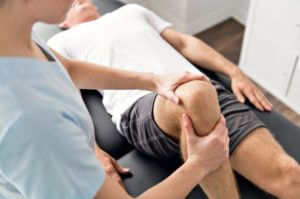 As a certified nursing assistant, you will be responsible for providing basic care to patients. This can include everything from helping them bathe and eat to providing emotional support. However, one of your job’s most important aspects is ensuring that patients maintain their Range of motion (ROM).
 Many patients may struggle to stand or walk on their own after an injury or surgery. They may require the help of a certified nursing assistant (CNA) to ambulate or move around. This process is called transfer. It can be very dangerous for both the patient and the CNA if the transfer is not done properly.
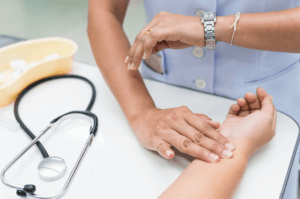 The radial pulse is the pulse felt on the wrist, on the side of the forearm nearest the thumb. The radial artery runs under the skin, and its pulsing can be felt below the surface. The radial pulse is often used to check a person’s heart rate. However, it can also be used to assess someone’s general health. In particular, the radial pulse can give clues about a person’s blood pressure and circulatory status.
 A clean and well-made bed can make a big difference in a patient’s morale. It also provides them with a sense of comfort and security. As a certified nursing assistant (CNA), you will be responsible for ensuring that your patients’ beds are made correctly and safely.